

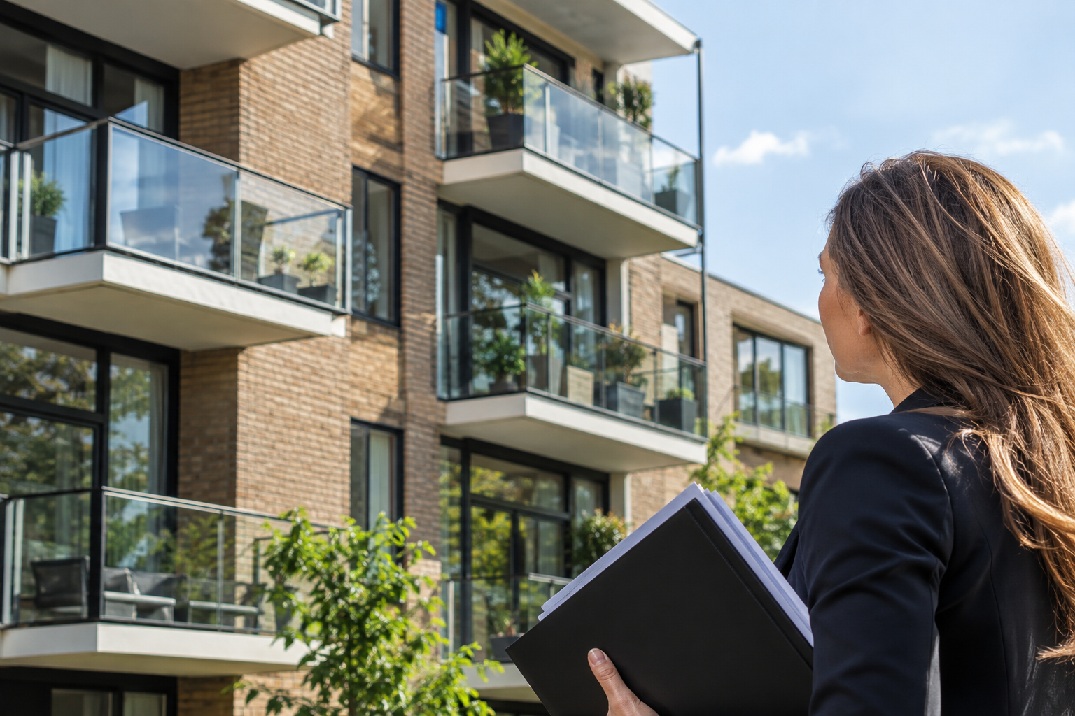
Is VvE approval enough for a balcony or extension? Not always
You are selling an apartment with a beautiful extension, balcony or perhaps even an additional rooftop floor. While checking the documents, you find minutes confirming that the Owners’ Association (VvE) approved the alteration years ago.
Everything properly arranged, you might think.
But is that approval legally sufficient?
Not necessarily. And this is exactly where a real estate agent needs to pay attention.
VvE approval does not necessarily mean everything is legally in order
With an apartment right, you are not only dealing with the physical property, but also with the deed of division (splitsingsakte) and the VvE.
If the owners’ meeting has approved an extension or balcony, this does not automatically mean that the new situation has been legally incorporated into the division.
Approval may also, depending on the circumstances, be withdrawn at a later stage. To properly and permanently formalise the altered situation, an amendment to the deed of division may therefore be necessary.
This is particularly important when the alteration changes the size or boundaries of the apartment right.
What about the municipal permit?
This is where confusion often arises in practice.
A municipal permit and approval from the VvE are two separate matters.
The municipality assesses the alteration from a public-law perspective: is the proposed construction legally permitted?
The VvE and the deed of division concern the private-law side: is the owner permitted to make the alteration within the ownership structure of the building, and does the newly created area legally form part of that owner’s apartment right?
It is therefore perfectly possible to encounter an extension that has been properly permitted by the municipality but has not been correctly formalised within the VvE or deed of division. The reverse can also occur.
Why should you recognise this as a real estate agent?
Imagine you are selling an apartment with a 20 m² extension. Naturally, those additional square metres play an important role in the presentation, floor area and value of the property.
Before putting the property on the market, you should therefore check:
- Was the alteration permitted by the municipality, where a permit was required?
- Did the VvE approve the alteration?
- What exactly was recorded in the minutes and the VvE resolution?
- Has the new situation been incorporated into the deed and drawing of division?
- Does the physical situation still correspond with what legally forms part of the apartment right?
Simply finding a sentence in old VvE minutes stating “the owners’ meeting grants approval” may therefore not be enough.
A small legal check can prevent a major problem
A good real estate agent adds value through much more than negotiating and selling property. Recognising legal issues like these before they become a problem is an important part of the job.
Whenever you see a balcony, extension, rooftop addition or another substantial alteration to an apartment, check the deed of division, drawing of division and relevant VvE documents.
Because something that has physically been there for twenty years is not automatically legally in order.
This is exactly the type of practical situation we cover at Dutch Realtor Training: not simply learning which documents to request, but understanding what to look for, what questions to ask and when a red flag should go up.
Want to get started as a real estate agent quickly?
Check out our unique, practical real estate course!


